



 800.827.6521
Music has long ceased to be just a background for entertainment. For many cancer patients, it becomes a kind of support and a tool for coping with stress. Sometimes an unexpected piece of advice from a doctor to “be happy” makes one wonder: how realistic is it to manage anxiety and find new ways to achieve inner balance? Why do traditional methods of psychological support not always provide the necessary effect, and can music become an effective alternative or at least a valuable addition to medical treatment?
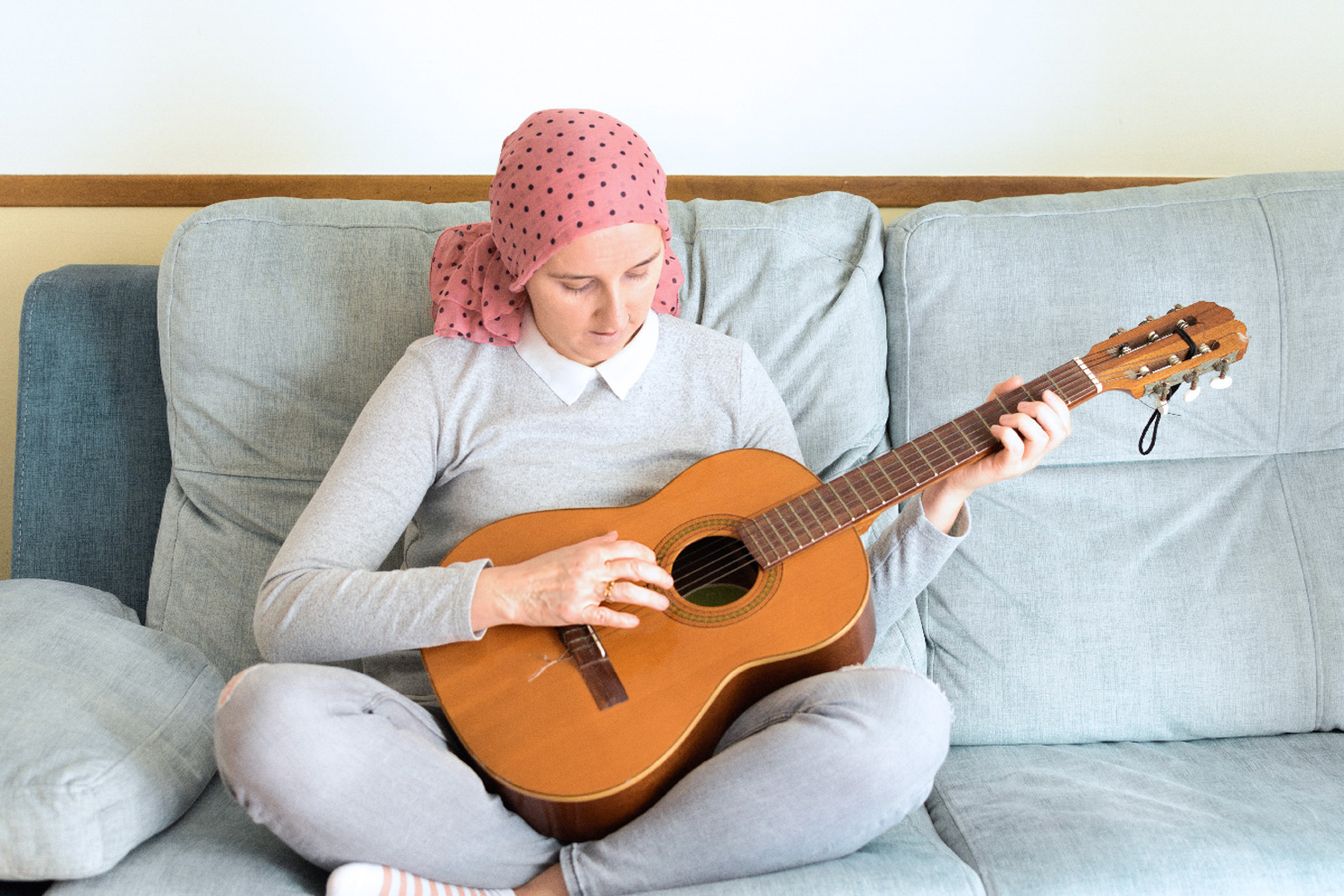
Music and emotions: how sounds affect a person’s state
Numerous studies confirm that music has a tangible impact on people’s emotional and physical state. When listening to favorite melodies, a person’s anxiety level decreases, positive emotions are activated, and new internal resources for fighting illness appear. Scientists explain this by the fact that music can influence the nervous system, stimulating the release of happiness hormones and reducing the level of cortisol—a marker of stress.
However, it is important to distinguish between simply listening to music at home and working with professional therapists who use specially developed techniques. This approach allows one to go beyond random pleasure and make music an effective tool for psychological support.
The story of Cynthia Malaran
The story of Cynthia Cherish Malaran, a well-known DJ and music producer from New York, illustrates how music can become an important part of recovery. Being successful in her profession and energizing entire dance floors, Cynthia never thought of music as a means of healing until she herself received a serious diagnosis.
At 39, she was diagnosed with breast cancer. After chemotherapy and surgery, her last hope was the drug Herceptin, which many patients called a “miracle” for its effectiveness in certain forms of cancer. However, after just a few treatments, Cynthia developed an allergy to the medication and was forced to stop treatment. In a moment of despair, she asked her oncologist what to do next and received unexpected advice: “Be happy.” According to Cynthia, it was at that moment she first thought about how exactly to manage her emotions to increase her chances of recovery. The search for her own way to cope with stress led her to music therapy.
What is music therapy and how is it conducted
Music therapy is a professional field in which a specially trained therapist helps the patient express emotions, reduce anxiety, and find internal resources through music. Unlike listening to songs on one’s own, here the support of a specialist and a well-thought-out structure are important.
Among the main forms of work are joint songwriting, discussing one’s own feelings and emotions, singing or listening to specially selected melodies. During a session, the therapist helps the patient express what is difficult to put into words and together create a musical piece. The goals of such sessions are not only to relieve anxiety, but also to support mood, develop self-regulation skills, and help process complex feelings that often accompany cancer.
What research shows
Modern scientific data confirm the effectiveness of music therapy. In June 2024, at the meeting of the American Society of Clinical Oncology, a large project was presented comparing the results of patients who underwent seven weeks of music therapy and standard cognitive behavioral therapy (CBT). Several dozen people participated in the study, each of whom attended hybrid sessions: conversations, songwriting, expressing emotions through music.
As Dr. Kevin Liu, a specialist from Memorial Sloan Kettering Cancer Center and author of the study, notes, music therapy is now becoming part of comprehensive treatment, expanding the possibilities for patient support. According to him, such methods do not replace primary treatment but complement it, making rehabilitation gentler and more personalized. “We want to have a wide range of tools to better select individual programs for each patient,” Liu emphasizes. Researchers note that the effect of music therapy is comparable to the results of CBT in reducing anxiety and improving quality of life.
Personal experience and individual effects
For Cynthia Malaran, music therapy emerged as a natural continuation of her professional path. As part of the “Melody Study” implemented at Memorial Sloan Kettering, she wrote lyrics, sang, and sometimes simply listened to music together with the therapist. Cynthia shares that the creative process allowed her to express her most difficult feelings, and the support of a specialist made her experiences less heavy.
An important long-term effect was that even three years after completing therapy, Cynthia continues to use music to stabilize her condition. She says that the habit of humming helps her cope with stress: “I don’t sing for pleasure. But I still hum—that’s my way of regulating tension and bringing my nervous system back into balance.” Similar sensations are familiar to many who have tried creative therapy methods—be it art therapy or participating in theatrical productions.
Why is the number of patients growing and is there an alternative to music?
According to the latest report from the American Cancer Society, there are currently about 18.6 million people in the US who have survived a cancer diagnosis. Thanks to advances in diagnosis and treatment, patients live longer, but face new questions: how to maintain quality of life, cope with fears, and find motivation for recovery.
Experts note that comprehensive support, including diverse and personalized methods, is becoming especially important in today’s conditions. According to Dr. Liu, “different people need different tools to recover not only physically, but also emotionally.”
And such tools do not necessarily have to be exclusively music. All people are different, and their interests can also be varied. There are people who simply do not like listening to music. Either they are not used to doing it in their lives, or they have not managed to find a suitable musical genre over the years.
At the same time, a person may feel a much stronger attraction to other types of art—painting, cinema, TV series. And today, video games have been added to this list, which have become much more diverse and interesting to people of all ages.
The diversity has also been influenced by the growth in the number of gaming platforms, especially mobile ones. After all, if not everyone has a computer or console, almost everyone nowadays uses a smartphone. Therefore, the popularity of mobile games is growing at an especially fast pace.
The iGaming industry can also be included in this category. Virtual gambling entertainment is similar to video games in terms of gameplay, and most titles have financially safe demo versions. Thousands of such games are collected in the apps of market leaders.
To verify this, we researched search results and studied several such apps. In the case of the well-known brand PinUp, we are talking about more than 5,000 games. And the 1win app, according to https://app1win.com/, in addition to games, also contains a wide range of features for sports betting. The Melbet or Parimatch apps may have fewer entertainment options, but all the main hits are there as well.
For this reason, thousands of different entertainments are available on a modern phone. And for this, you don’t even have to get out of bed, which is especially convenient for seriously ill people.
Where music therapy is heading
Specialists emphasize that music therapy does not suit everyone. Its effectiveness depends on the patient’s personal characteristics, musical preferences, and readiness for creative interaction. In the coming years, scientists plan to determine which groups of patients receive the greatest benefit and how best to adapt methods to expand access to therapy.
It is expected that with the development of technology, new formats will appear: interactive apps, remote participation programs, selection of individual scenarios taking into account tastes and specific needs. Can music become an integral part of the medicine of the future and replace familiar methods of rehabilitation?